Linguist
Most language-learning apps overwhelm beginners — especially children — with long text and intimidating lesson structures. Linguist replaces that with a friendly mascot, illustrated quizzes, and a world-map dashboard that turns learning into an adventure.
- Role
- UI/UX Designer
- Timeline
- 2026
- Type
- Mobile App
- Tools
- Figma
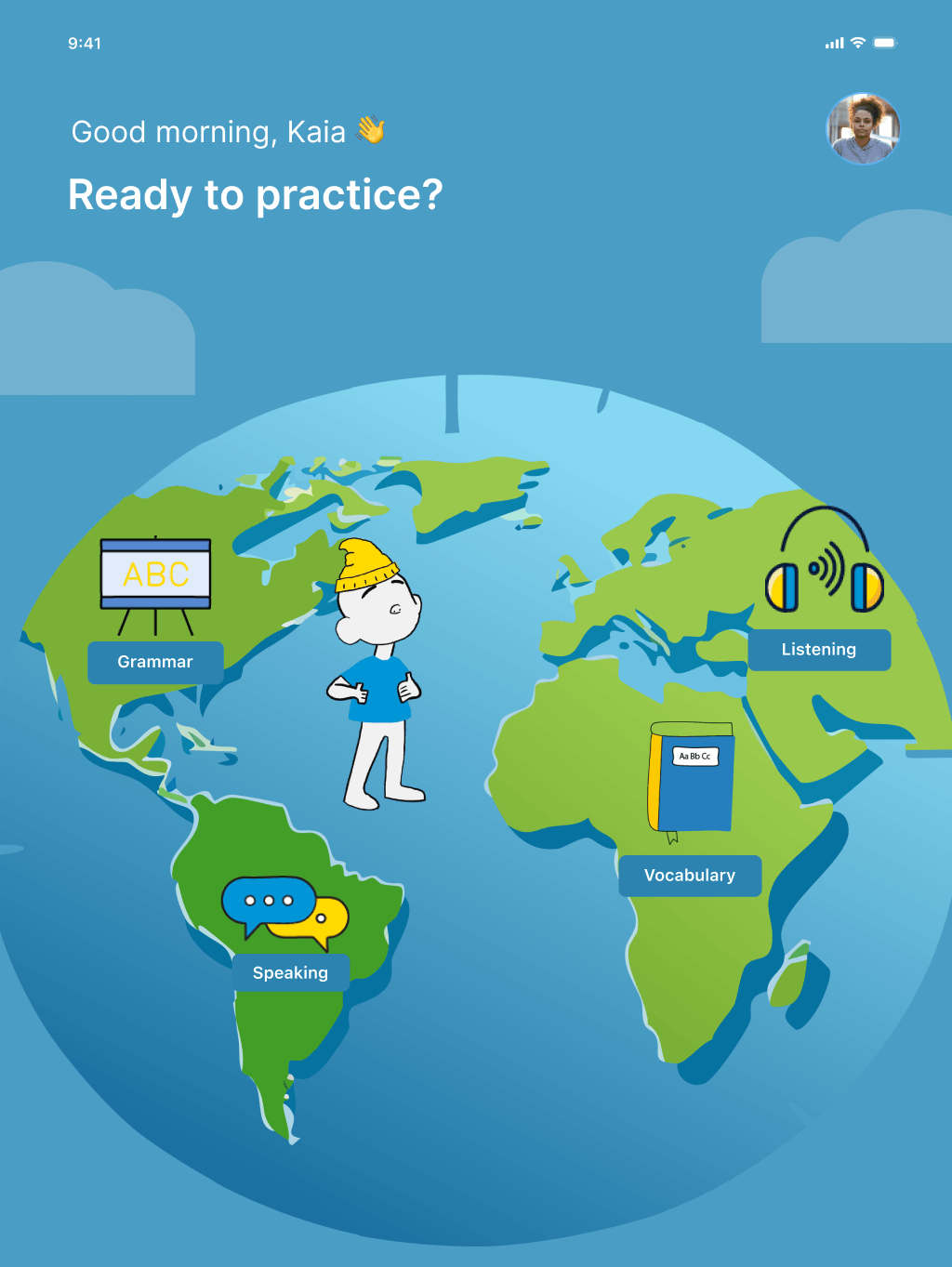
A friendly, illustration-first language-learning app for beginners — especially children — that replaces intimidating text and lesson lists with a mascot guide, visual quizzes, and a world-map dashboard.
- Role
- UI/UX Designer
- Timeline
- 2026
- Type
- Mobile App
- Tools
- Figma
- Outcome
- A guided, mascot-led flow that makes a child's first steps in a new language feel like play — approachable and visual enough to build confidence instead of anxiety.
Language learning shouldn't feel like work
Most language-learning apps overwhelm beginners, and children most of all — long blocks of text and intimidating lesson structures create anxiety instead of excitement. And children are the hardest audience to design for, because they won't tell you what's wrong.
A child won't file feedback — they'll just quietly stop opening the app. That raises the bar on every tone, tap target, and bit of warmth.
A guided start, led by a mascot
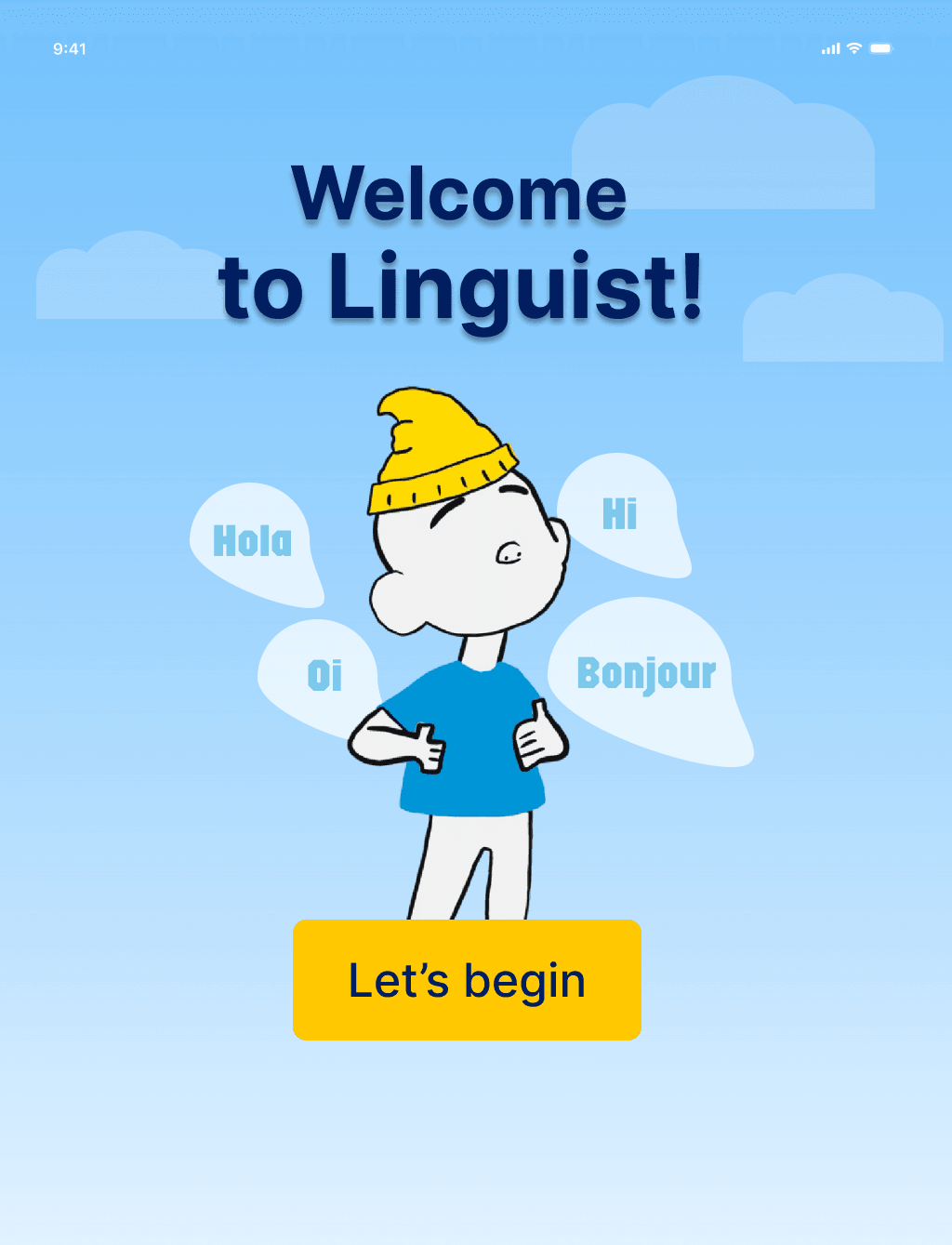
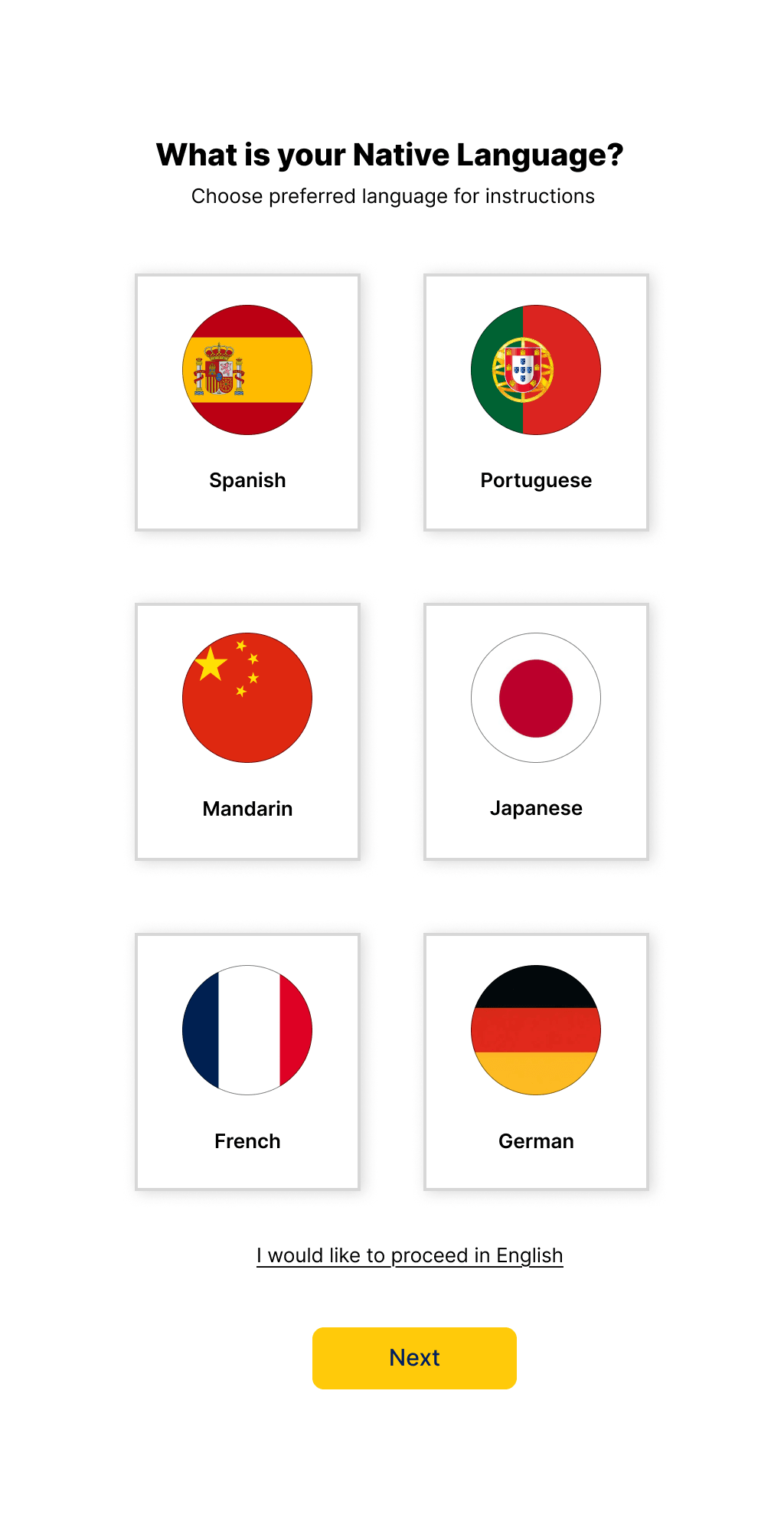
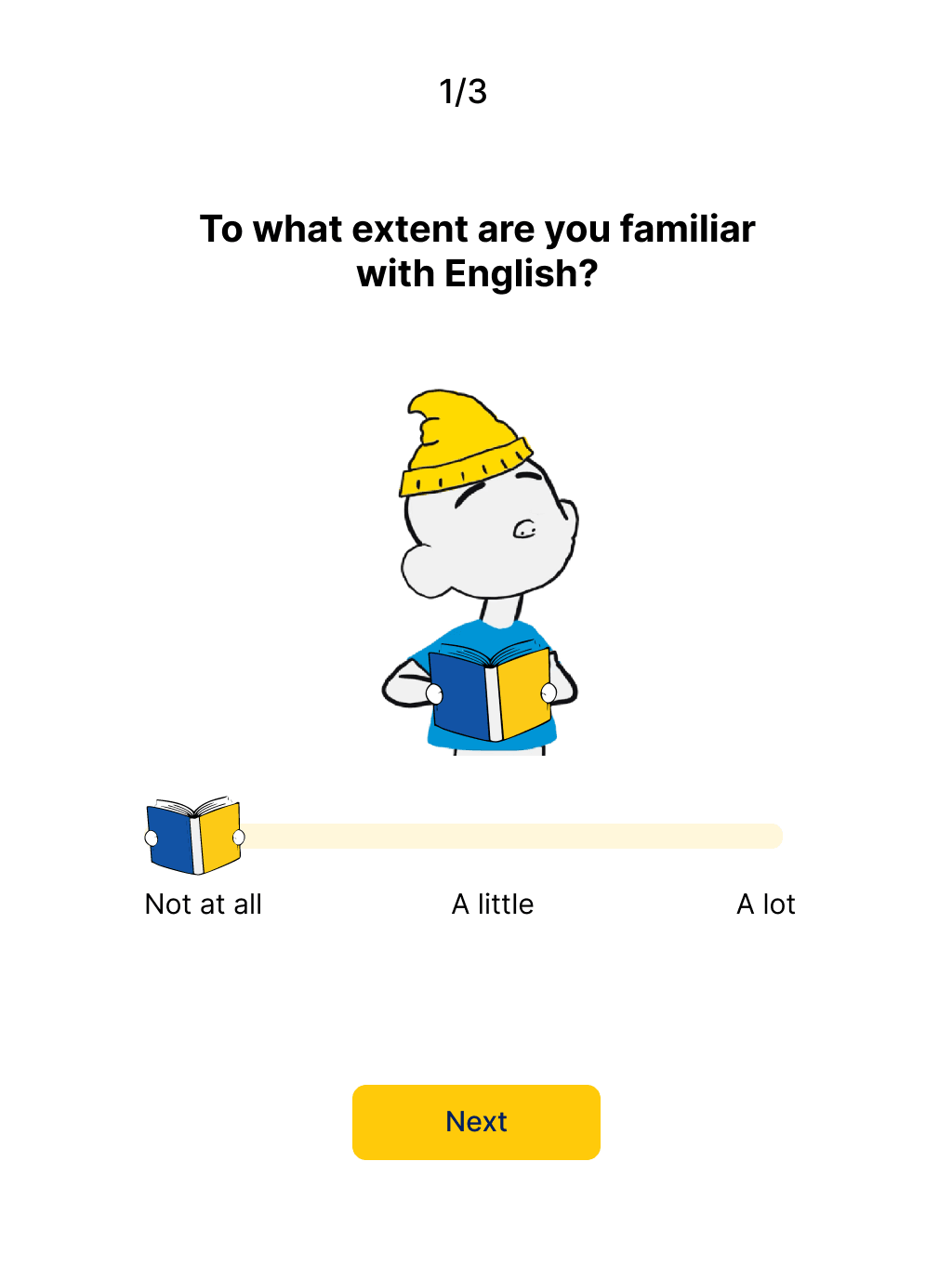
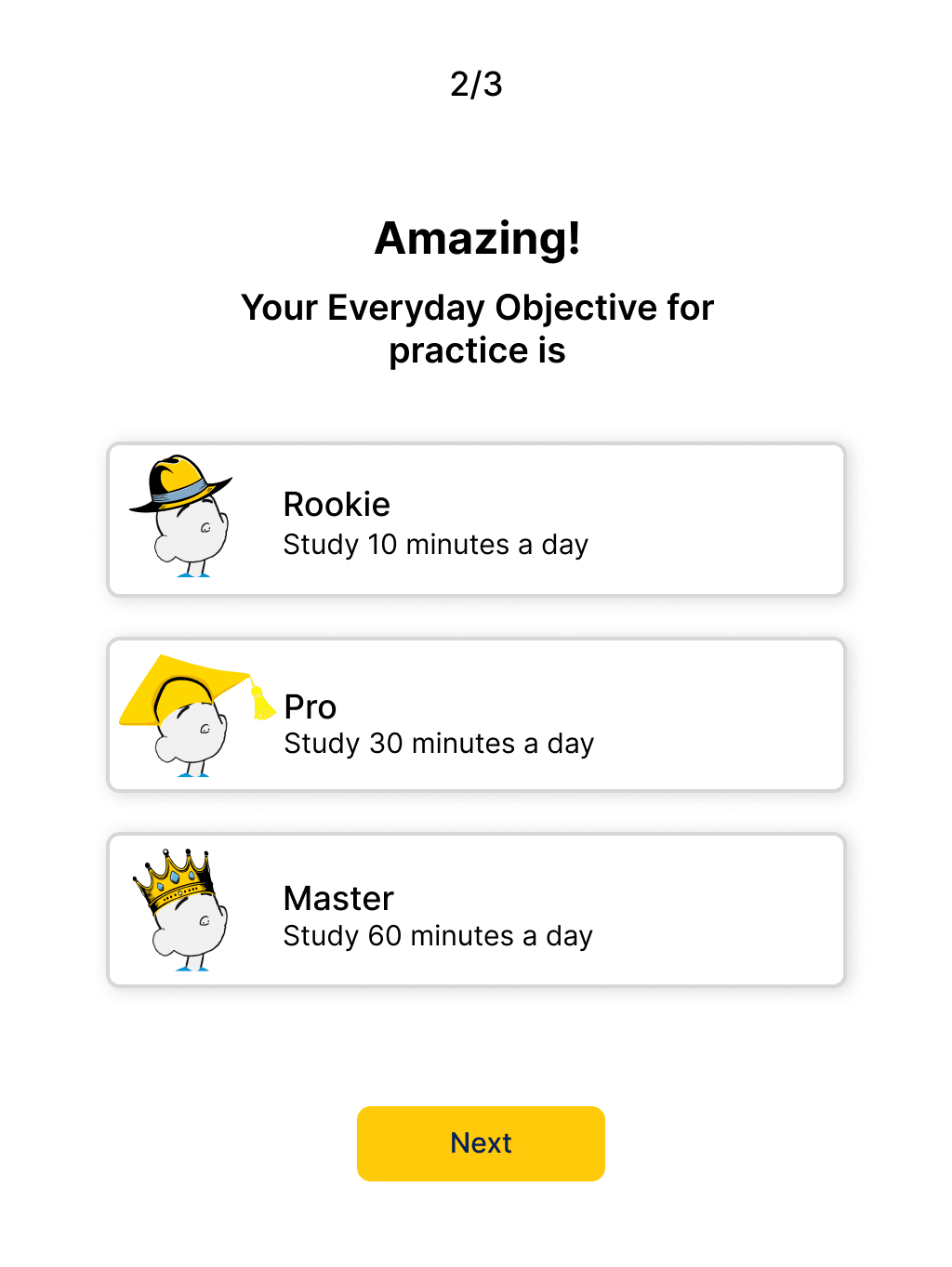
The first run is the make-or-break moment. Instead of a sign-up form, the mascot welcomes the child and walks them through a few playful, illustrated choices — native language, current fluency, a daily goal — that personalize the whole experience before a single lesson begins.
Where the question is a picture
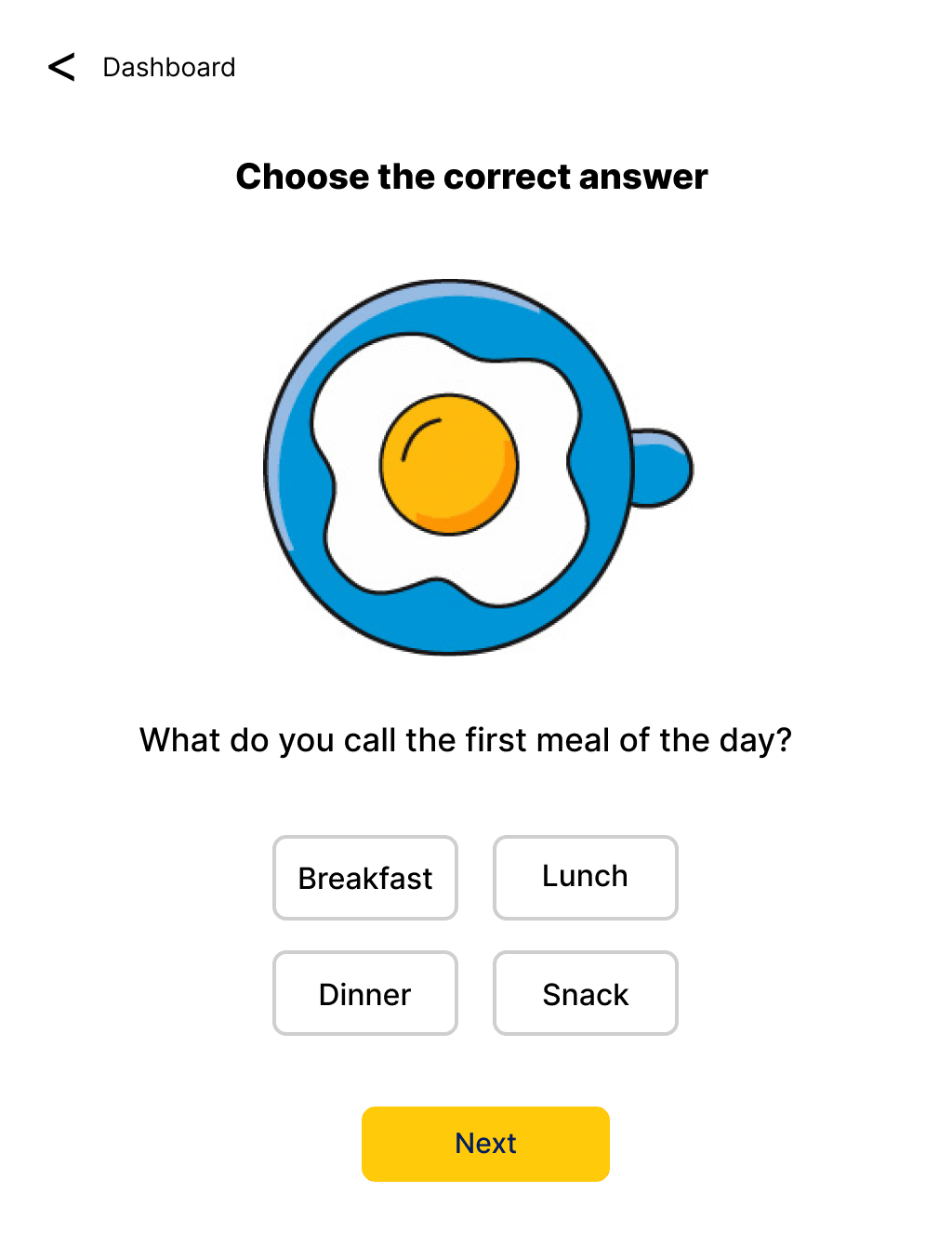
Lessons are visual-first by design — a quiz shows an illustration, not a paragraph, so comprehension never depends on reading the child can't yet do. And being wrong is designed for: a miss gets an encouraging "Not quite, try again!" rather than a harsh red X, keeping a young learner's confidence intact.
Mascot-driven UX
The character guides every step, building an emotional connection and easing the anxiety of starting something new.
Visual-first learning
Illustrated clues over text-heavy prompts — comprehension stays intuitive for pre-readers.
World as playground
The globe turns skill categories into a geographic adventure: learning framed as places to explore.
What I'd carry forward
Linguist was an exercise in designing for an audience that can't tell you what's wrong. That raised the bar on everything — the tone of error states, the size of tap targets, the warmth of the mascot.
If I took it further, I'd test with children directly and watch where they hesitate. With this audience, observation is the only honest research — and it would sharpen the onboarding pacing in ways I can't guess from the outside.