
Fokus
Fokus is a mobile productivity app for students who struggle to organize assignments and hold focus. Created for a History of Design course, it translates the discipline of German Jugendstil — and Peter Behrens' work — into a modern, usable interface.
- Role
- UI/UX Designer
- Timeline
- Spring 2026
- Type
- Mobile App
- Tools
- Figma
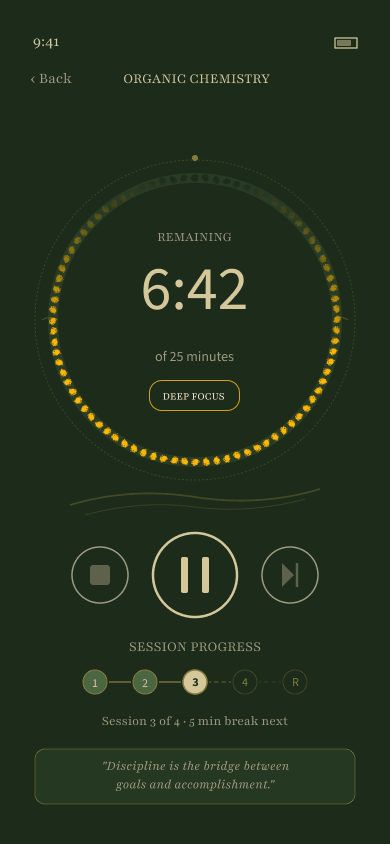
A mobile productivity app for students, built for a History of Design course — it translates the discipline of German Jugendstil (1895–1915) and Peter Behrens' work into structured scheduling, deep-work sessions, and streak-based habits.
- Role
- UI/UX Designer
- Timeline
- Spring 2026
- Type
- Mobile App
- Tools
- Figma
- Outcome
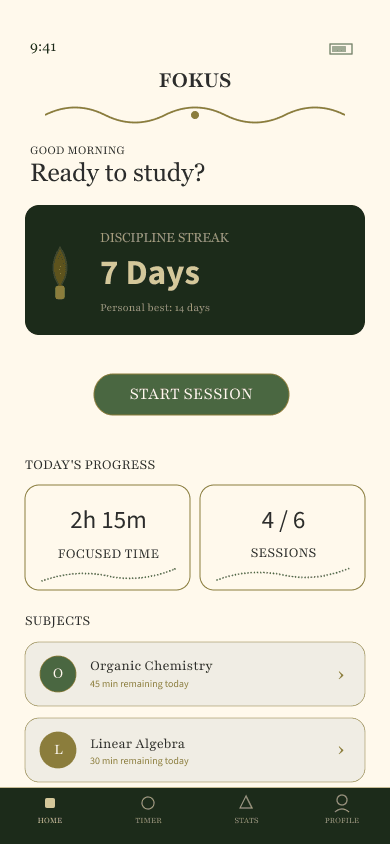
- A full 8-screen app where a century-old design movement's principles — structure, restraint, unity of art and function — shape a genuinely usable modern interface.
Students lose to disorganization, not difficulty
Most students don't fall behind because the work is too hard — they fall behind because nothing holds the work together: no structured plan across competing deadlines, no accountability, no protected deep-work time, nothing that makes consistency feel earned.
Fokus treats focus as a habit to be designed for — not a willpower problem to be scolded about.
Discipline, borrowed from 1907
The brief: take a premodern design movement and translate it into a working product. I chose German Jugendstil — the Germanic branch of Art Nouveau — and specifically Peter Behrens, whose AEG identity was arguably the first comprehensive corporate design language. His principle, beauty in service of usability, became the thesis for Fokus.
Structured grids
Disciplined layout with a clear, unmistakable hierarchy.
Restrained ornamentation
Decorative elements only where they serve a function.
Disciplined typography
Bold, geometric letterforms that carry authority.
Unity of art & function
Every aesthetic choice earns its place by improving usability.
Eight screens, one disciplined system
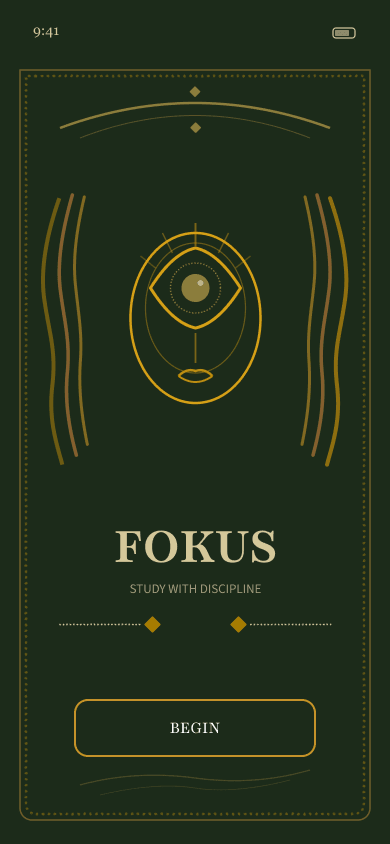
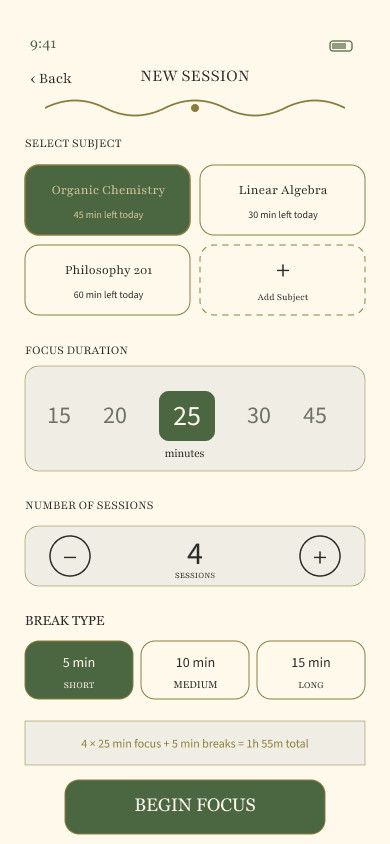
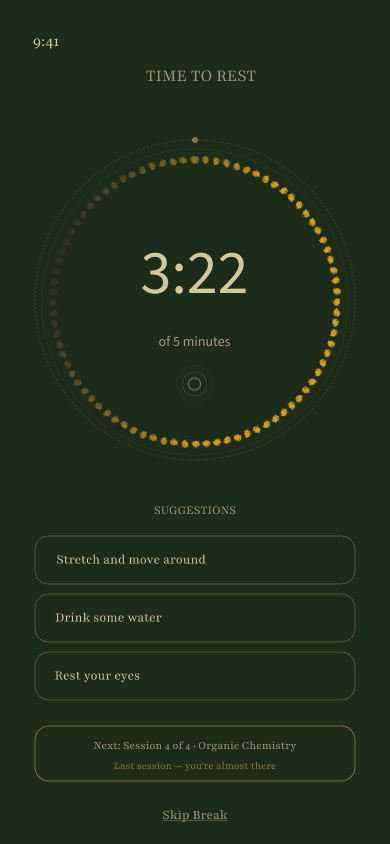
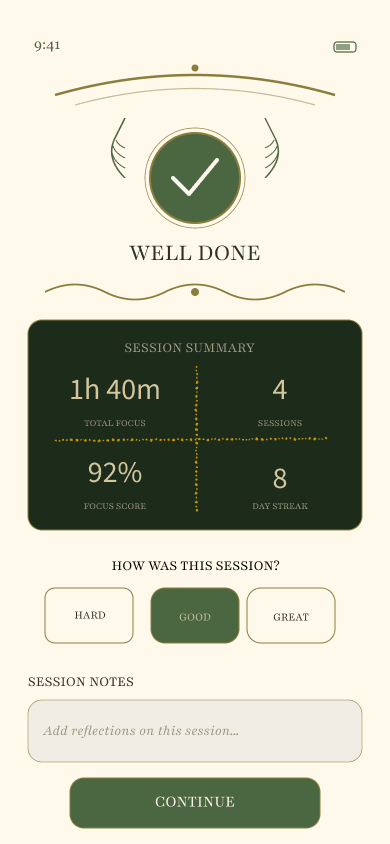
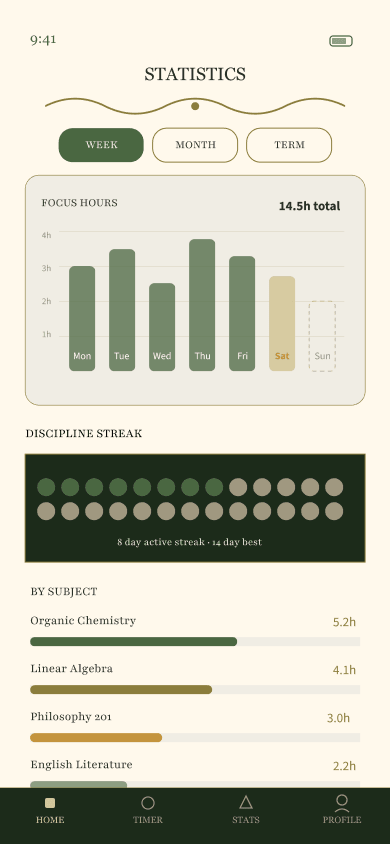
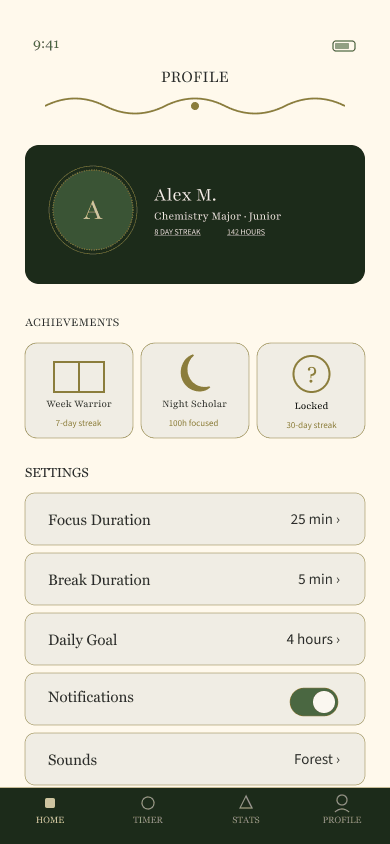
The full journey — onboarding through a complete study session and the data that follows it. Every screen holds the same forest-green-and-gold palette, ornamental serif type, and structured grid, so the Jugendstil identity reads as one coherent system rather than decoration.
What I learned
Translating a decorative historical movement into a functional interface was a balancing act — preserving Jugendstil's ornamental character without compromising the clarity students need.
The lessons transfer beyond this project. Restraint: less ornamentation, purposefully placed, has more impact than more. Adaptability: historical styles inform modern UI best when their principles transfer, not their visuals. Hierarchy: Behrens' structured grid maps almost directly onto UI layout. A design language a century old still holds up — as long as you borrow the discipline behind it rather than copying the surface.