
Craft
Craft is an AI-powered creative intelligence platform — upload a poster, brand identity, or moodboard and the platform explains why the work works: color palette rationale, typographic hierarchy, compositional logic, and creative strategy. Education, not generation.
- Role
- Founder & Full-Stack Developer
- Timeline
- June 2026 — ongoing
- Type
- AI Platform
- Tools
- Next.js, TypeScript, Supabase, OpenAI
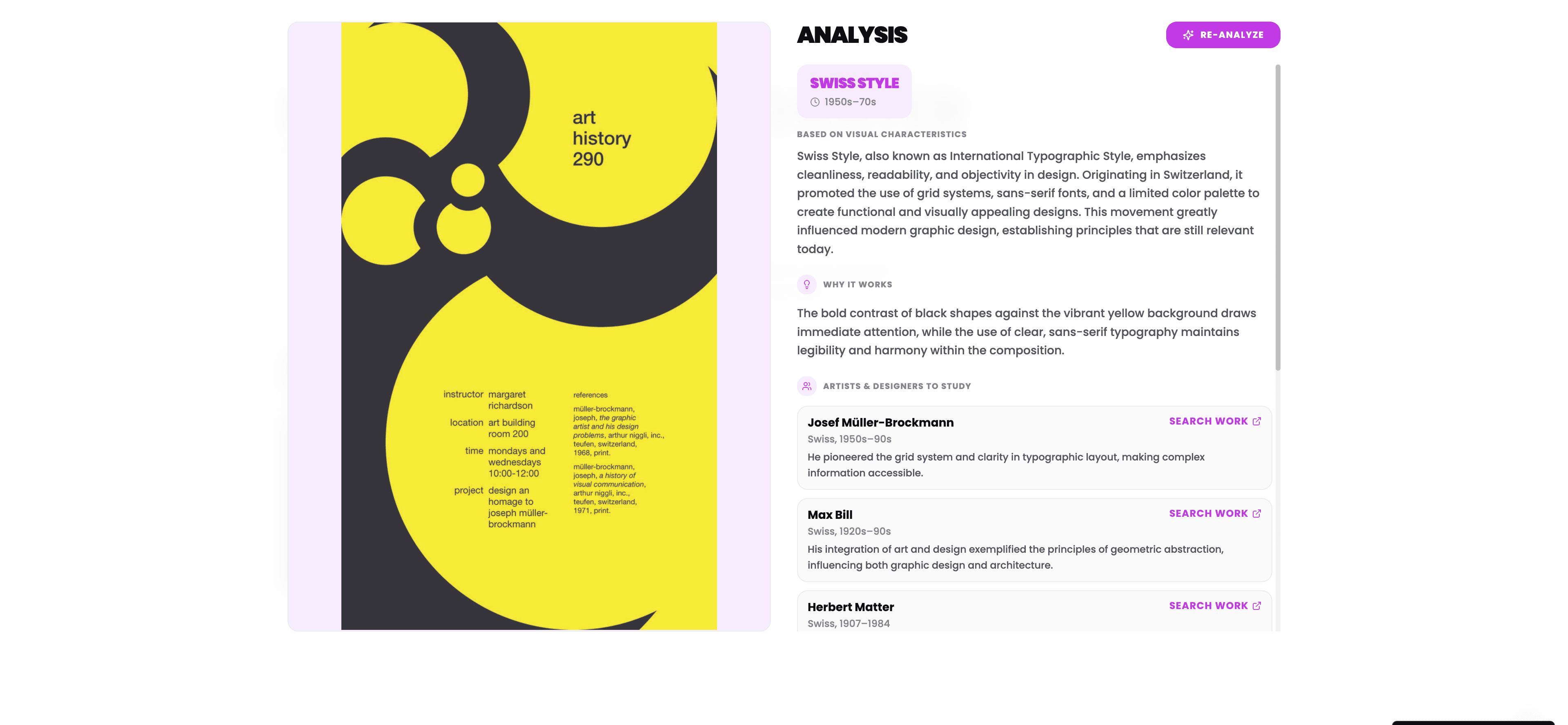
NotebookLM for creative work — upload a poster, brand identity, or moodboard and the AI explains why it works. Not generation. Understanding.
- Role
- Founder & Full-Stack Developer
- Timeline
- June 2026 — ongoing
- Type
- AI Education Platform
- Built with
- Base44 · AI Analysis
- Outcome
- A working end-to-end analysis pipeline: upload any visual asset and receive a movement breakdown, era placement, educational context, artist recommendations, and a four-section AI analysis — all in one panel.
Creatives collect references. Nobody teaches them how to read them.
Design students spend the early phase of every project doing the same thing: building a messy folder of references and moodboards — then trying to reverse-engineer why something works from pure intuition. The AI tools that exist generate output for you. None of them build the understanding you need to develop your own eye.
What Craft refuses to be
The product brief started with refusals. Each one is a real failure mode in the AI-tools space.
Not a content generator
Midjourney, Canva AI — tools that create for you skip the most valuable part of learning. Craft makes work for you to understand, not copy.
Not a generic AI dashboard
Most 'AI for creatives' products are ChatGPT with a design skin. Craft is scoped entirely to visual analysis and design education.
Not a search engine
The Inspiration page surfaces movements and references — but the core product is understanding, not discovery. The analysis is the value.
Upload. Analyze. Understand.
Drop any visual into a project — a poster, a brand identity, a UI screenshot — then hit Analyze. Craft's AI places it in its exact design movement, names the era, and delivers a structured educational breakdown.
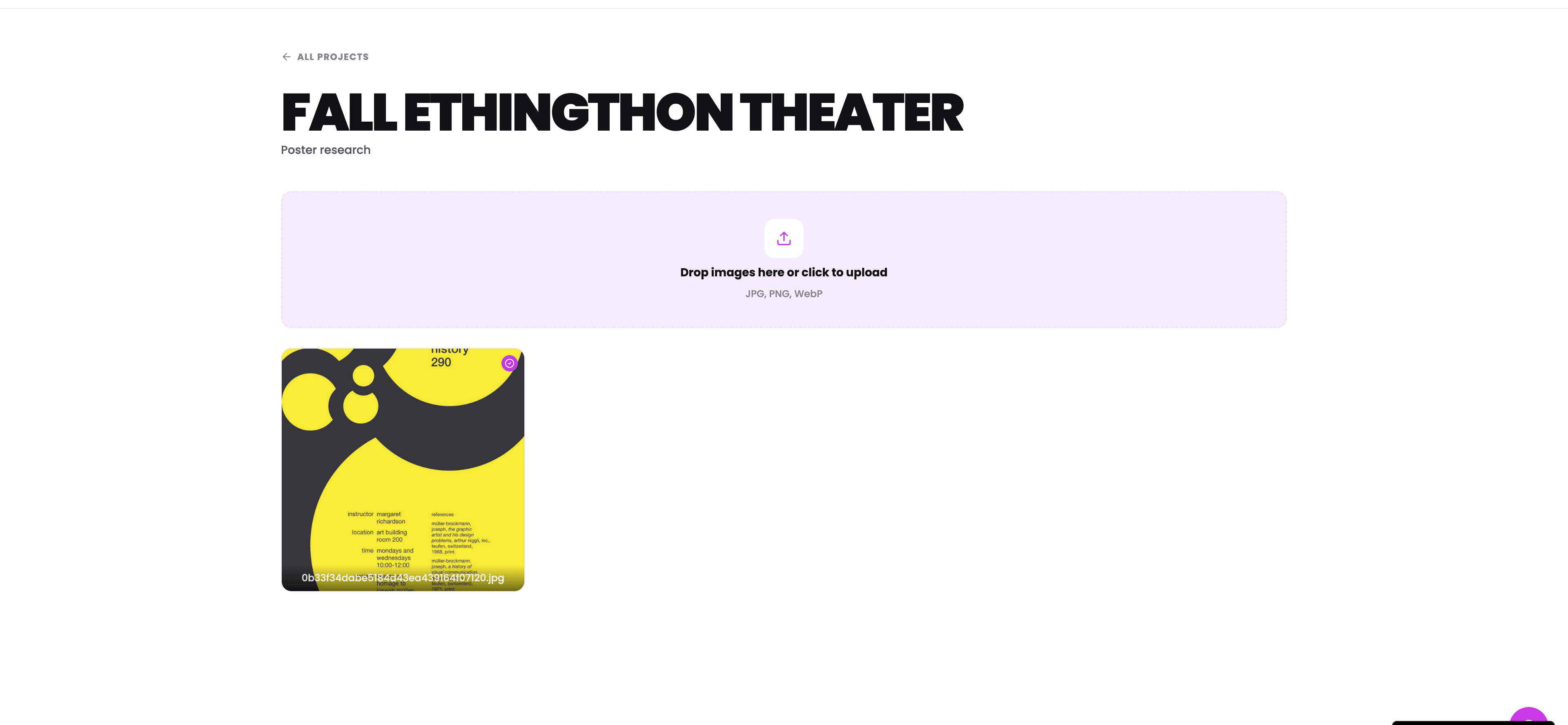
Named movements, not vague descriptions
The Creative Strategy section is the product's heartbeat. It doesn't say "minimalist" or "clean" — it names the exact movement (Swiss International Style, Bauhaus, Art Deco, Neo-Brutalism), places it in a specific decade, and delivers 2–3 sentences of educational background: who pioneered it, what philosophy drove it, why it still matters.
Research boards, not a search engine
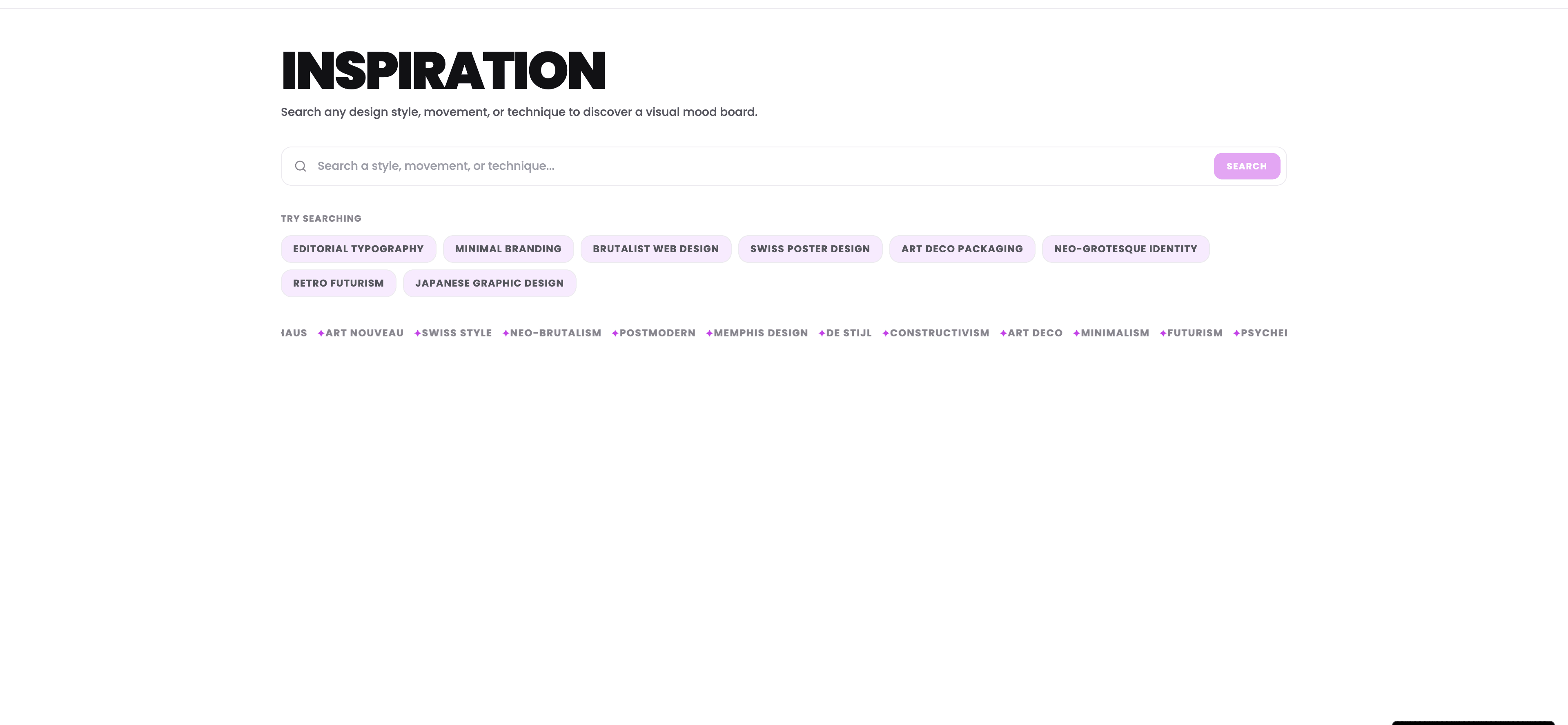
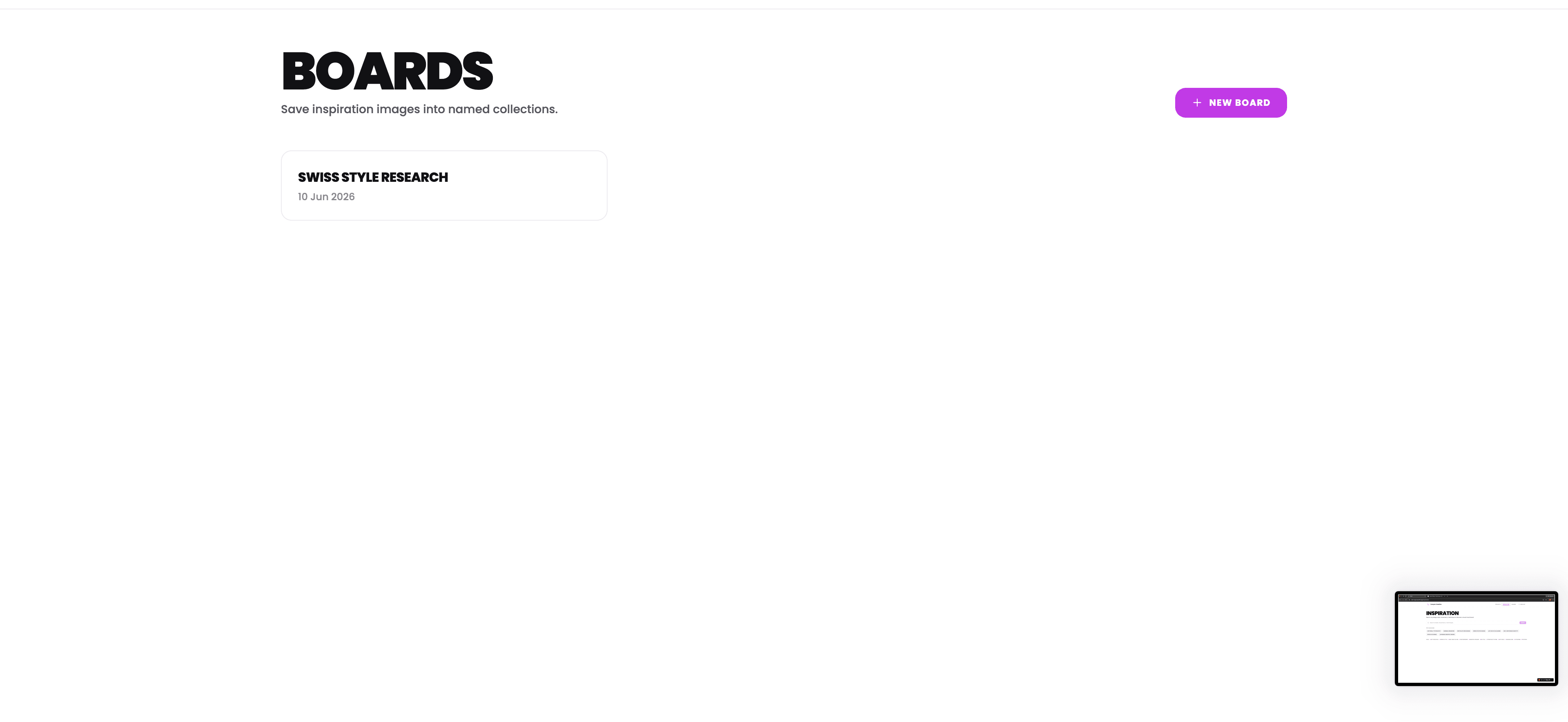
The Inspiration page lets students search any design style or movement and build curated visual mood boards from the results. Save anything worth keeping to a named Board.
Where it stands
Named
Every analysis places the work in an exact design movement — Bauhaus, Swiss Style, Art Deco — not vague descriptors
Artists
Each movement surfaces key figures with direct search links — study Josef Müller-Brockmann, not 'Swiss designers'
Live
End-to-end pipeline running — upload, analyze, board, and research in one place
Restraint as the product decision
The strongest calls on Craft were refusals — no image generation, no video analysis, no real-time collaboration. Every cut made the core value clearer: upload something, understand it. The educational frame (named movements, artist recommendations, historical context) emerged from working with a professor who saw the platform as a learning resource for GCU design students — not just a productivity tool. That framing sharpened everything.